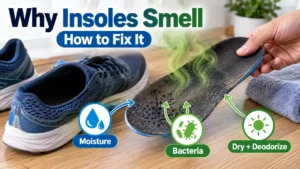
Squeaking is almost always friction between two surfaces that are rubbing together and should not be; in most cases, that is the underside of the insole moving against the footbed of the shoe, with trapped moisture making it worse.
The short version: dry the shoe and insole thoroughly, then dust talcum powder or cornflour under the insole. That resolves the majority of cases. If the noise persists, the next step is a thin fabric layer or securing the insole so it cannot move at all.
Where the Squeak Is Actually Coming From
Squeaking is almost always friction between two surfaces that are rubbing together and should not be; in most cases, that is the underside of the insole moving against the footbed of the shoe, with trapped moisture making it worse.
The short version: dry the shoe and insole thoroughly, then dust talcum powder or cornflour under the insole. That resolves the majority of cases. If the noise persists, the next step is a thin fabric layer or securing the insole so it cannot move at all.
Under the insole
If the shoe is silent without the insole and squeaks with it in, the noise is coming from the contact surface between the two. This is the most common case by a wide margin.
Smooth-backed insoles on smooth synthetic footbeds are the usual culprit, particularly when there is any moisture between them. Every step creates a tiny amount of slip, and that slip is what you hear.
Inside the insole
If pressing the insole with your hand on a hard surface reproduces the noise, the squeak is coming from within the insole itself. Layered insoles with a gel pod or an air pocket can trap air between the layers, and the noise is that air being forced through a gap.
This is less common and less fixable. Powder and fabric will not help, because the friction is inside a sealed component.
Somewhere else in the shoe
If the shoe squeaks with the insole removed, the insole was never the problem. Loose sole bonding, a worn midsole, or moisture in the shoe’s own construction all produce similar noise.

Four Ways to Stop Insoles Squeaking
These are alternatives rather than a sequence. Start with the first, and move on only if it does not work.
Fix 1: Dry everything properly
Moisture is the most common cause and the easiest to miss, because a shoe can feel dry to the touch while still holding damp in the foam.
Remove the insole and leave both the shoe and the insole to air-dry separately for at least twenty-four hours somewhere warm but not hot. Newspaper or a shoe dryer speeds this up. Direct heat from a radiator or hairdryer does not, and it can warp foam and weaken adhesives.
If the squeak disappears after drying and returns a few days later, the cause is your own perspiration rather than an outside soaking, and Fix 2 is the durable answer.
Fix 2: Talcum powder or cornflour under the insole
A light dusting of powder under the insole absorbs residual moisture and reduces friction between the two surfaces. It is the standard fix, and it works in most cases.
Take the insole out, sprinkle a small amount across the footbed of the shoe, tap out any excess, and replace the insole. You want a thin film, not a layer you can see pooling. Too much powder clumps once it takes up moisture and can create a gritty feel underfoot.
Cornflour works as well as talc and is easier to find. Baby powder is the same thing, with fragrance added.
Fix 3: A dryer sheet or thin fabric layer
If powder has not worked, a physical barrier between the insole and the footbed removes the contact entirely.
A dryer sheet cut to the shape of the footbed is the usual improvised version. A thin piece of felt or a cut-down sock works just as well and lasts longer. Keep it thin, because anything substantial adds volume and can push your heel out of the shoe.
Fix 4: Stop the insole moving at all
If the insole cannot move, it cannot generate friction. Two or three small strips of double-sided tape at the heel and under the forefoot will hold it in place.
Use a tape that peels cleanly, and place it at the edges rather than the centre so the insole can still flex naturally. This also solves the related problem of an insole that creeps forward as you walk.
How to Tell If It Is the Shoe, Not the Insole
Three quick checks, in order.
- Walk in the shoe with the insole removed. If it still squeaks, the insole is not the cause.
- Press and twist the sole with your hands. A squeak that appears when you flex the shoe by hand usually means the outsole or midsole bond has started to separate. That is a shoe repair, not an insole fix.
- Check the tongue and the laces. A rhythmic creak that matches your stride can come from the eyelets or the tongue rubbing against the upper, which is easily mistaken for an insole noise. A little wax or lubricant on the eyelets settles it.

What Not to Use
Some commonly suggested fixes make things worse.
- Oil, WD-40 or silicone spray. These degrade foam and adhesives, stain the upper, and transfer to your socks. Never put a petroleum-based product inside a shoe.
- Heavy powder loading. More powder is not better. Once it absorbs moisture, it clumps into a gritty paste that is worse than the original noise and harder to remove.
- Gluing the insole down permanently. This makes the insole impossible to remove for drying or cleaning, which guarantees the moisture problem comes back and stays.
- Thicker socks as a fix. They mask the noise slightly by damping it, but they add volume at the forefoot and can create a fit problem while leaving the friction untouched.

When a Squeak Means the Insole Is Finished
Occasionally the noise is a symptom rather than a nuisance.
An insole with a gel pod or air chamber that has started squeaking from inside has usually developed a split between layers. There is no repair for that, and the cushioning in that section will already be performing differently from when it was new.
Similarly, an insole that has compressed unevenly can develop a hard ridge that rubs and creaks against the footbed. If the insole no longer sits flat when you place it on a table, its useful life is over.
Neither is common in a new insole. Both are worth checking on one that has been in daily use for a year or more.
Frequently Asked Questions (FAQs)
Q1. Why do my insoles only squeak when they are new?
New insoles have smooth, uncompressed surfaces that slide easily against a smooth footbed. As the insole beds in and picks up a slight texture, the friction usually reduces on its own. Powder handles the interim.
Q2. Does squeaking mean the insole is faulty?
Usually not. Noise between the insole and the shoe is a fit and friction issue rather than a defect. A squeak coming from inside a layered or gel insole is different and can indicate a split between layers.
Q3. Will talcum powder damage the insole?
No. Powder sits on the surface, absorbs moisture and reduces friction, and can be tipped out when you next remove the insole. Use a thin dusting rather than a heavy layer, since excess powder clumps once it takes up moisture.
Q4. Why does it squeak in one shoe but not the other?
Footbed materials vary slightly between the two shoes of a pair, and most people sweat more from one foot than the other. Either difference is enough to tip one shoe into squeaking while the other stays quiet.
Q5. How long does the fix usually last?
Drying and powdering typically hold for several weeks before needing to be repeated, depending on how much you perspire and how often the shoes are worn. A fabric layer or double-sided tape lasts considerably longer because it removes the contact rather than lubricating it.